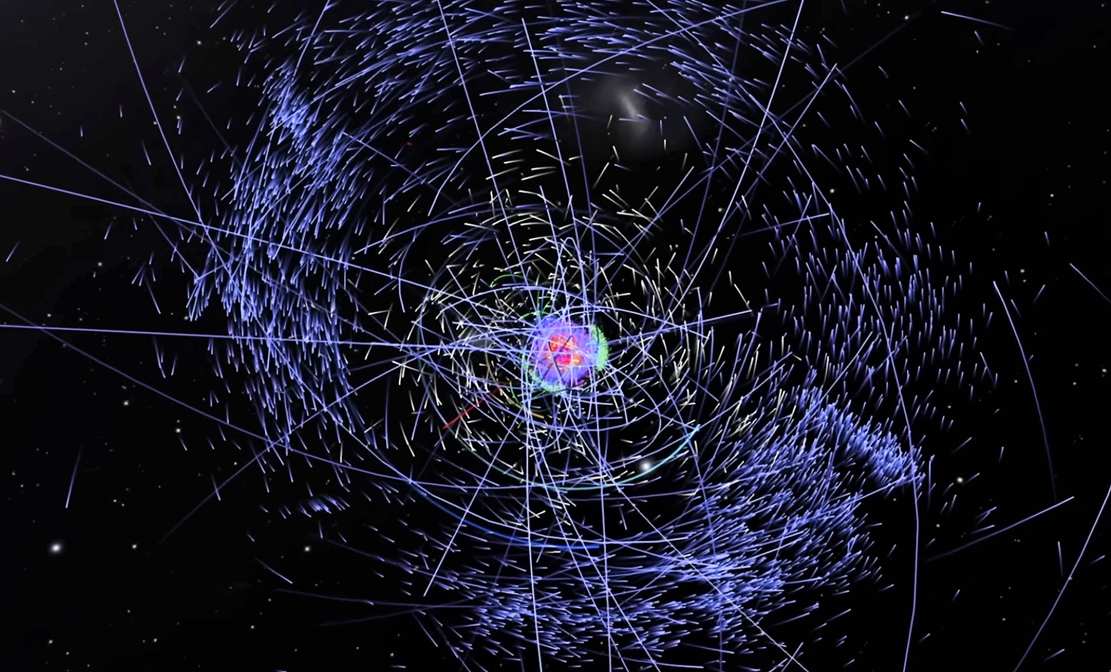
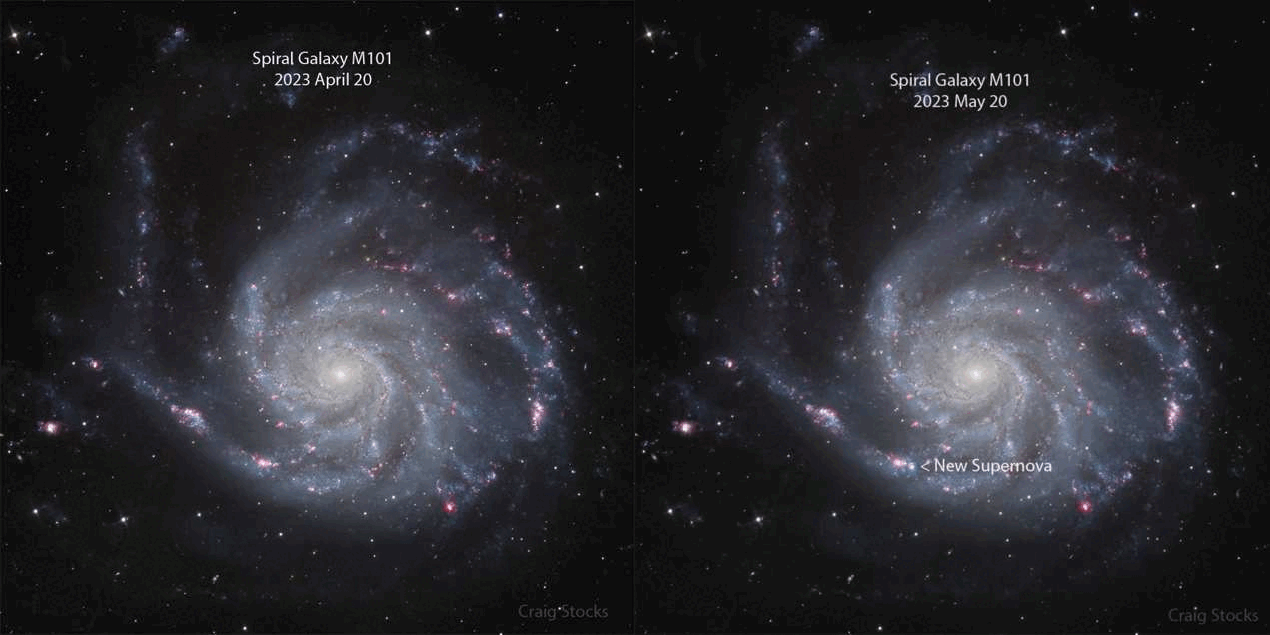
Our Location in the Universe
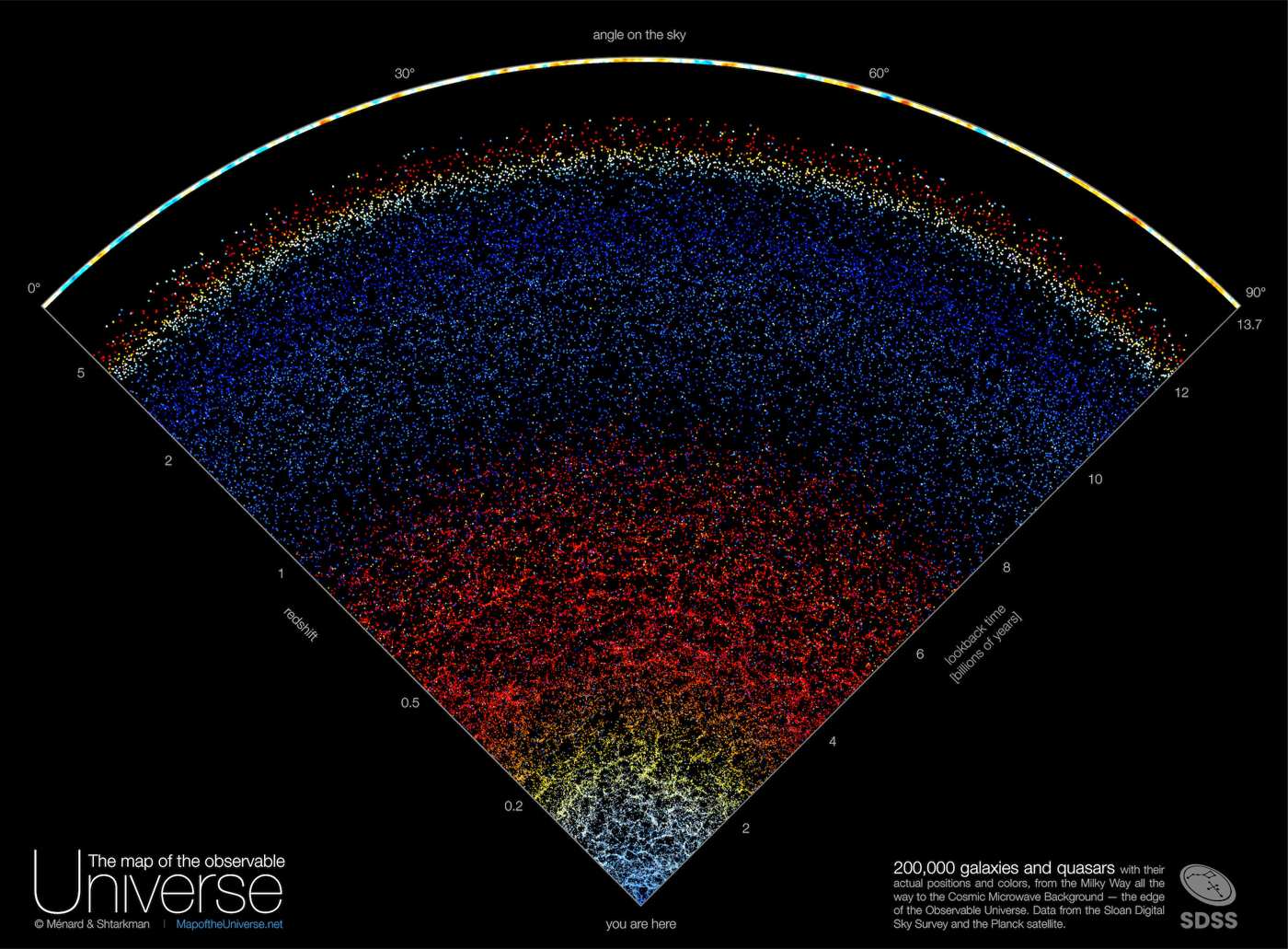
We find out that earth is not the center of the universe and from the 17th century that the Sun is not the center of our galaxy (Milky Way). Today we know that our galaxy is part of a growing universe with billions of galaxies, containing billions of Suns (Stars).
The images after the jump explain our place in the universe with a very easy way.
Galaxy size comparison
How big are Galaxies? Using images made from NASA and ESA observation missions Arecibo astrophysicist Rhys Taylor, illustrates the relative sizes of 25 selected galaxies, including our Milky Way at the center for comparison. Have a look at the detailed chart after the jump…
Hubble sees Space Invader image
Hubble space telescope spots a ‘space invader’ that seems to show an alien staring at Earth. Actually the strange object is a mirage created by the gravitational field of a foreground cluster of galaxies. Image © NASA/ESA. Acknowledgement: N. Rose
Andromeda’s Colorful Rings
Andromeda’s colorful rings – like swirls of dust, in the new image from the Herschel Space Observatory, will help astronomers to find the very coldest dust in our nearby galaxy. Image © ESA/NASA/JPL-Caltech/NHSC
100 billion Planets around us
100 billion Planets around us! Caltech-led astronomers now estimate that at least 100 billion planets populate the our Milky Way. Image © Luc Perrot; Luc’s Web site
Most distant object in the Universe
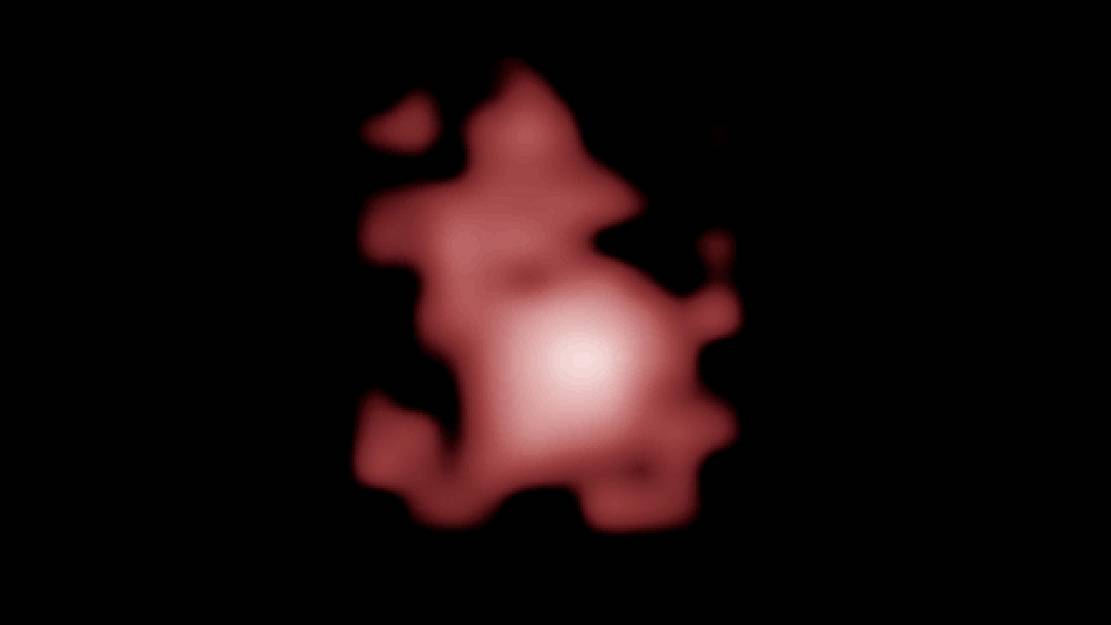
The newly discovered galaxy is the Most distant object in the Universe. Named MACS0647-JD, we see it as it was 420 million years after the Big Bang. Watch the impressive video…
9-Billion-Pixel Photo of Milky Way Center
This new gigantic 9-Billion-Pixel photo of Milky Way’s center, from the VISTA infrared survey telescope at ESO’s Paranal Observatory, contains more than 84 million stars. Image credit: ESO/VVV Consortium. Acknowledgement: Ignacio Toledo, Martin Kornmesser
New Black Hole in our Galaxy
Astronomers using NASA‘s Swift satellite recently detected a new black hole, by a rise in high-energy X-rays from a source toward the center of our Milky Way galaxy. The outburst, produced by a rare X-ray nova, came from a previously unknown stellar-mass black hole. Image credit: NASA’s Goddard Space Flight Center
Black Eye Galaxy
A collision of two galaxies has left a merged star system with an unusual appearance as well as bizarre internal motions. Messier 64 (M64) has a spectacular dark band of absorbing dust in front of the galaxy‘s bright nucleus, giving rise to its nicknames of the “Black Eye” or “Evil Eye” galaxy. Image credit: NASA and The Hubble Heritage Team (AURA/STScI)
Centaurus A radio galaxy, as seen by ALMA
This new image of the centre of the distinctive galaxy Centaurus A, made with the Atacama Large Millimeter/submillimeter Array (ALMA), shows how the new observatory allows astronomers to see through the opaque dust lanes that obscure the galaxy’s centre, with unprecedented quality. Image credit: ALMA (ESO/NAOJ/NRAO); ESO/Y. Beletsky