Horsehead of a different color
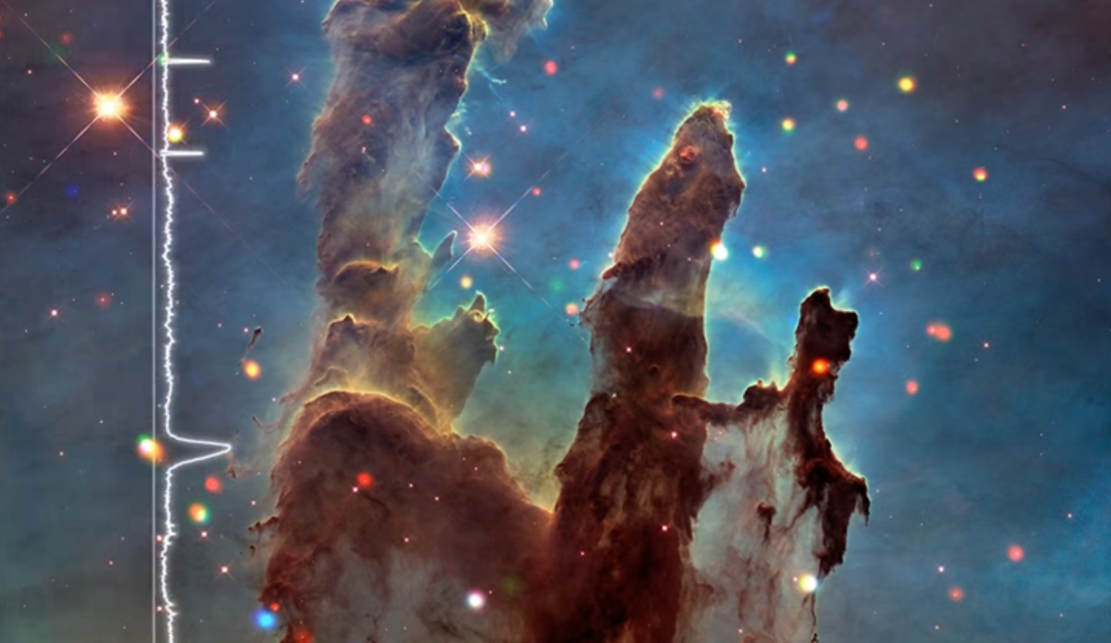
A new infrared photograph of the iconic Horsehead Nebula by NASA’s Hubble Space Telescope, to mark the 23rd anniversary of the famous observatory. Image © NASA/ESA/Hubble Heritage Team
Rogue Planetary Orbit for Fomalhaut b
This Hubble Space Telescope false-color composite image, reveals the orbital motion of the exoplanet Fomalhaut b. Based on these observations, astronomers calculated that the planet is in a 2,000-year-long, highly elliptical orbit. Image © NASA, ESA, and P. Kalas (University of California, Berkeley and SETI Institute)
Hubble sees Space Invader image
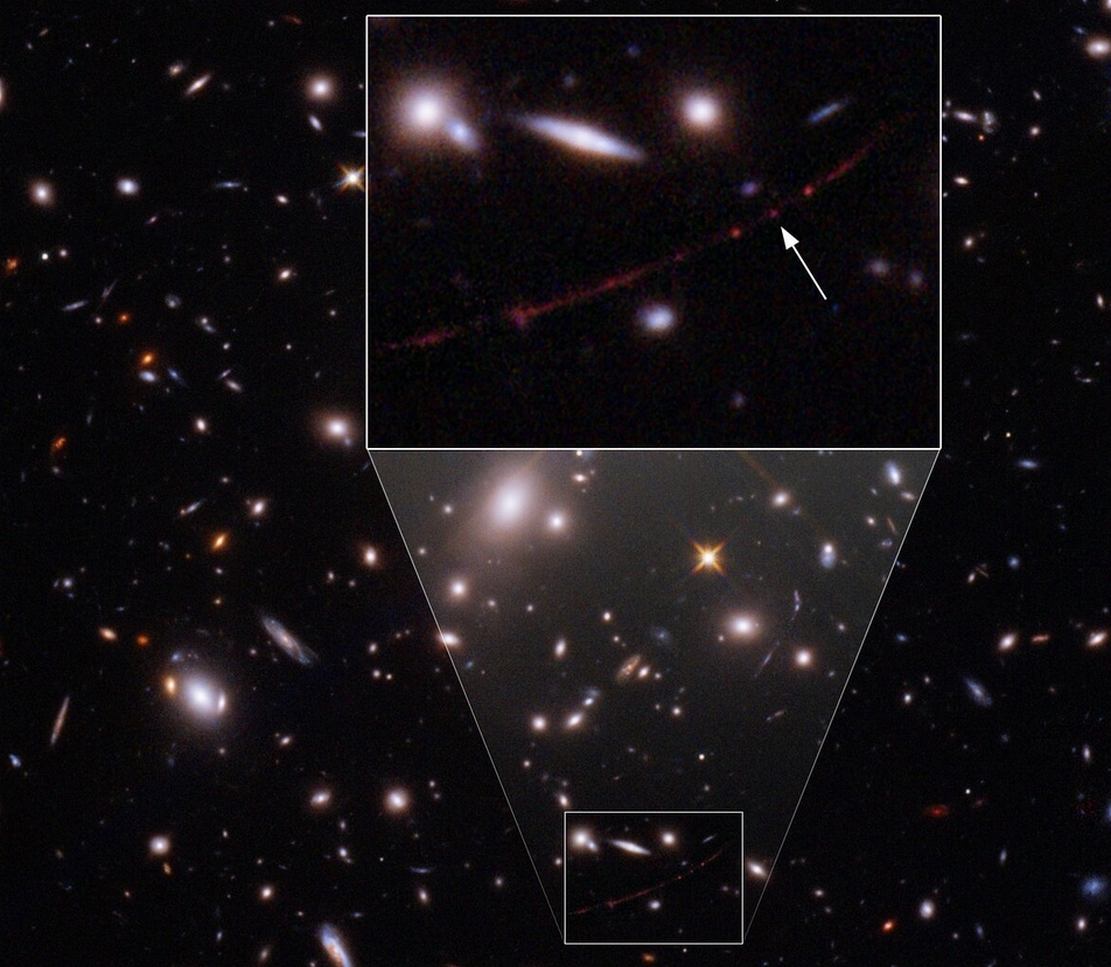
Hubble space telescope spots a ‘space invader’ that seems to show an alien staring at Earth. Actually the strange object is a mirage created by the gravitational field of a foreground cluster of galaxies. Image © NASA/ESA. Acknowledgement: N. Rose
Atlas V Launches TDRS-K
Beyond a fertile field of satellite communication antennas at Kennedy Space Center, an Atlas V rocket launches a Tracking and Data Relay Satellite (TDRS; sounds like TEE-dress). The thoughtfully composed image recorded on the evening of January 30. Image © Ben Cooper (Launch Photography). Used with permission.
Forecast for Exotic Weather
Astronomers using NASA’s Spitzer and Hubble space telescopes have probed the stormy atmosphere of a brown dwarf named 2MASSJ22282889-431026, creating the most detailed “weather map” yet for this class of cool, star-like orbs. Artist’s conception: NASA/JPL-Caltech
Hubble’s Heavenly Holiday Ornament
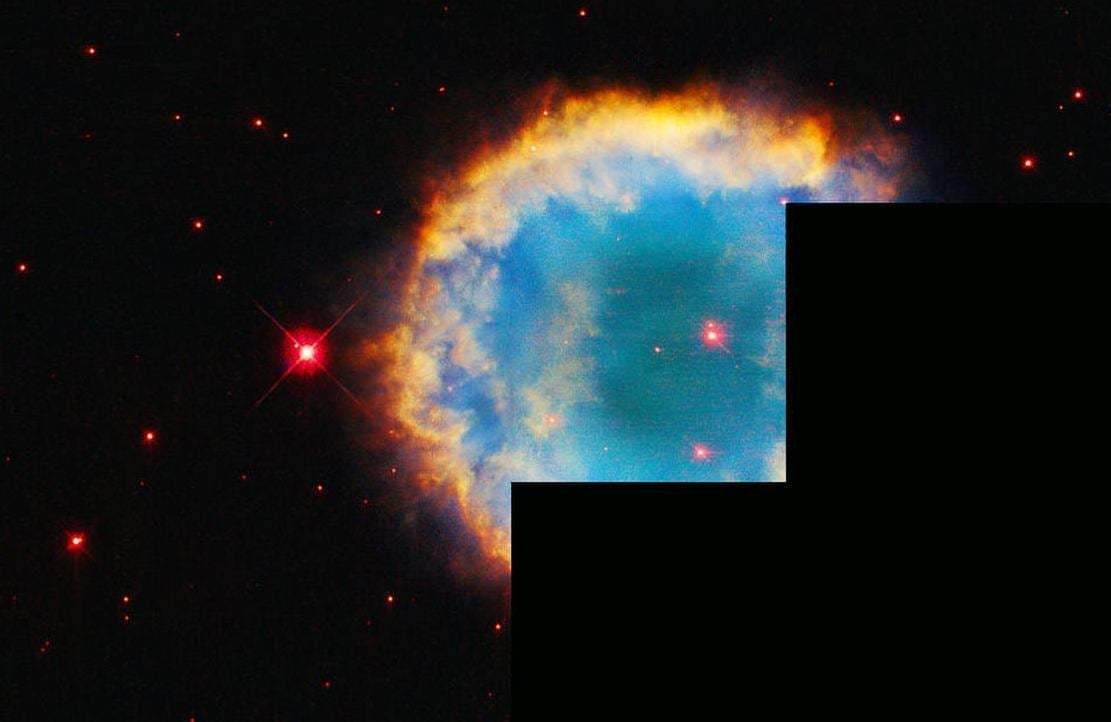
With this Hubble’s Heavenly Holiday Ornament, NASA/ESA celebrates the holiday season. A striking image of the planetary nebula NGC 5189. The intricate structure of the stellar eruption looks like a giant and brightly coloured ribbon in space. Larger image Image credit: NASA, ESA and the Hubble Heritage Team (STScI/AURA) source Hubble Space Telescope
Earliest Views yet of the Universe by Hubble
These are the Earliest Views yet of the Universe by Hubble Space Telescope. Astronomers found a group of very young galaxies that formed when the universe was just 3 percent of its age. Image credit: NASA, ESA, R. Ellis (Caltech), and the UDF 2012 Team
Read more 
Most distant object in the Universe
The newly discovered galaxy is the Most distant object in the Universe. Named MACS0647-JD, we see it as it was 420 million years after the Big Bang. Watch the impressive video…
Composite image of the Crab Nebula
A star’s spectacular death in the constellation Taurus by Spitzer Space Telescope, was observed on Earth as the supernova of 1054 A.D. Now, almost a thousand years later, a super dense object – called a neutron star - left behind by the explosion is seen spewing out a blizzard of high-energy particles into the expanding debris field known as the Crab Nebula. Image: X-Ray: NASA/CXC/J.Hester (ASU); Optical: NASA/ESA/J.Hester & A.Loll (ASU); Infrared: NASA/JPL-Caltech/R.Gehrz (Univ. Minn)
Gallery of Planetary Nebulas
A gallery of four Planetary Nebulas, in this composite image, shows X-ray emission from Chandra colored purple, and optical emission from the Hubble Space Telescope colored red, green and blue.