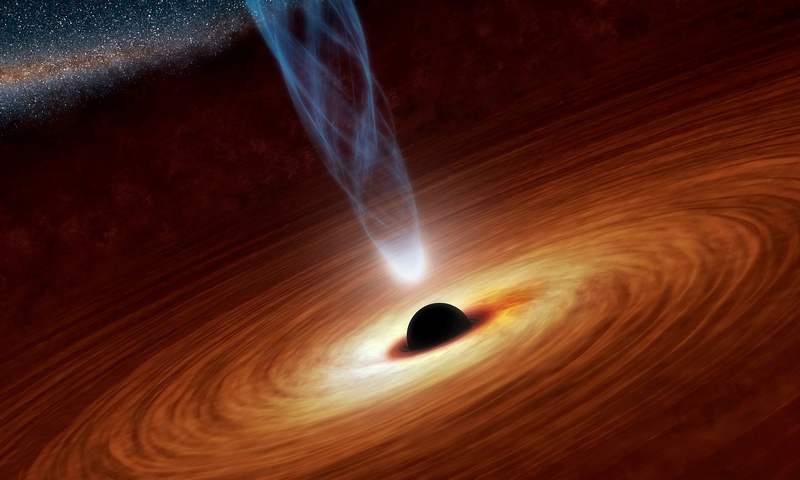
Supermassive Black Hole spins nearly at the speed of light
This supermassive black hole, with millions to billions times the mass of our sun, lies at the heart of a galaxy called NGC 1365 and it is spinning almost as fast as Einstein’s theory of gravity will allow, nearly at the speed of light. Image © NASA/JPL-Caltech
Reflection patterns off a mirror at XMM-Newton
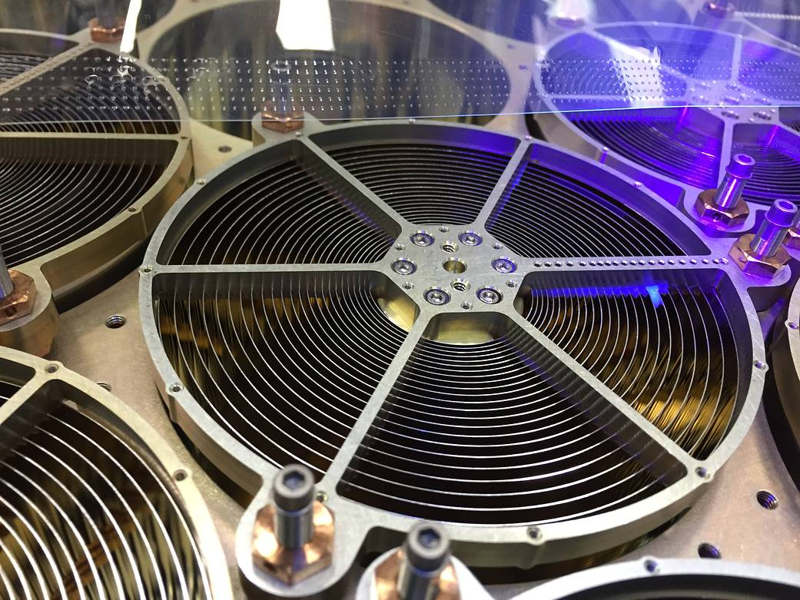
You are looking at the reflection patterns off one of the gold-plated spare mirrors of ESA’s XMM-Newton X-ray space telescope shows a side of the mission rarely seen. Image credit: ESA/Patrick Dumas/Look at Sciences
First X-ray view of Martian soil
This graphic is from the first X-ray view of Martian soil by the Chemistry and Mineralogy (CheMin) experiment on NASA’s Curiosity rover. Image credit: NASA/JPL-Caltech/Ames
Gallery of Planetary Nebulas
A gallery of four Planetary Nebulas, in this composite image, shows X-ray emission from Chandra colored purple, and optical emission from the Hubble Space Telescope colored red, green and blue.
Jake Matijevic Rock
The Jake Matijevic rock that Curiosity explored for several days on Mars, is marked by red dots indicate areas where the rover shot the rock with laser blasts and purple circles indicate areas investigated with X-rays beams. Image credit: NASA/JPL-Caltech/MSSS
New Black Hole in our Galaxy
Astronomers using NASA‘s Swift satellite recently detected a new black hole, by a rise in high-energy X-rays from a source toward the center of our Milky Way galaxy. The outburst, produced by a rare X-ray nova, came from a previously unknown stellar-mass black hole. Image credit: NASA’s Goddard Space Flight Center
X-Ray photography by Nick Veasey
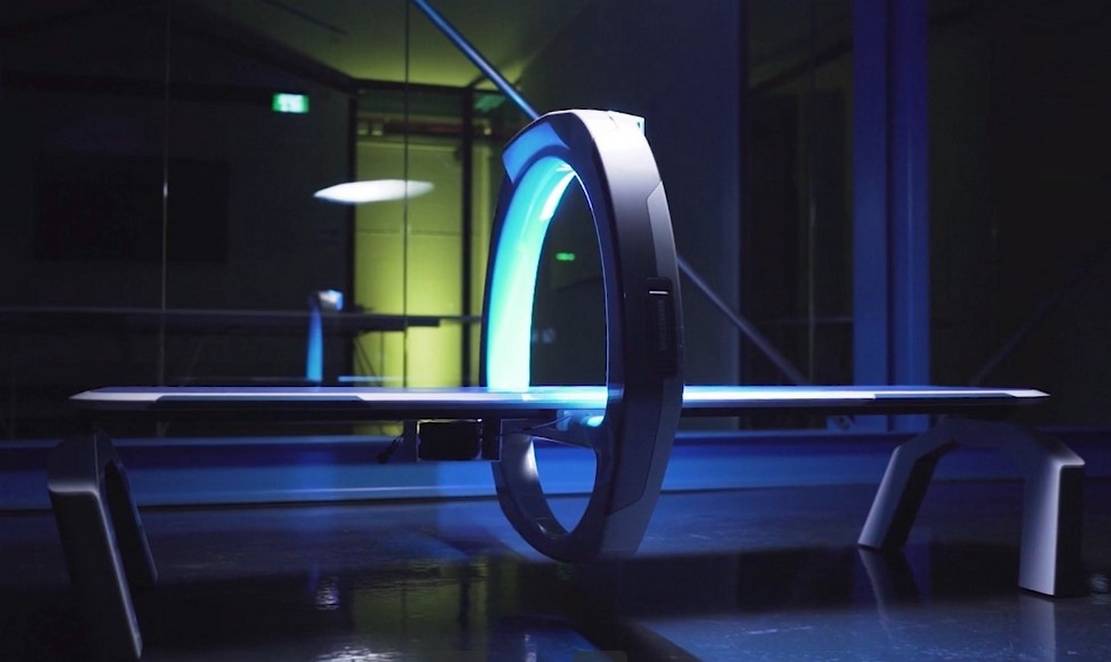
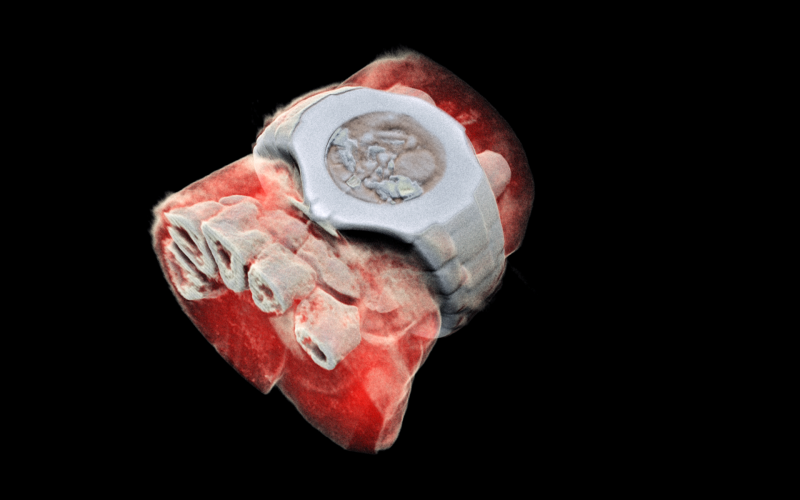
Nick Veasey uses x-ray technology to create photographic works revealing the structural anatomy of a range of subjects from small animals, plants, insects, toys, cars. Some of them require industrial x-ray facilities to be captured. © Nick Veasey
The Black Widow Pulsar
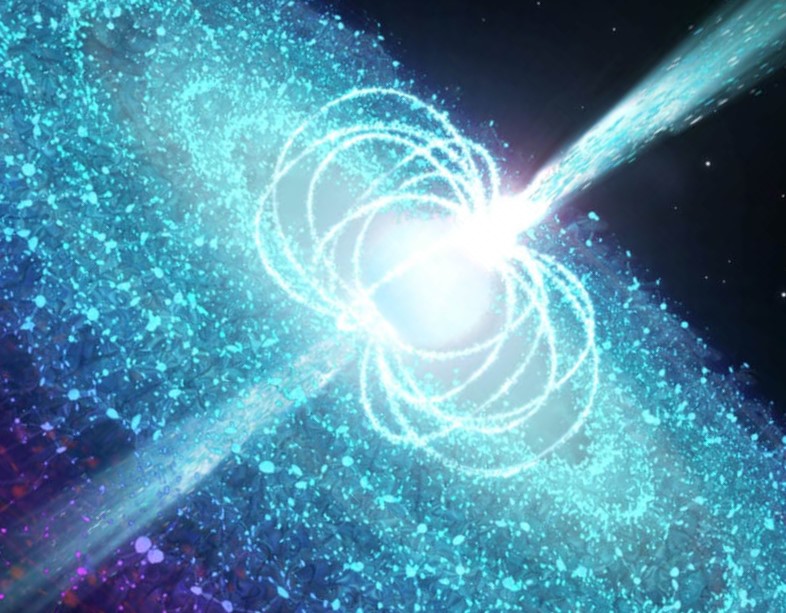
The “Black Widow” pulsar is moving through the galaxy at a speed of almost a million kilometers per hour. A bow shock wave due to this motion is visible to optical telescopes, shown in this image as the greenish crescent shape. The pressure behind the bow shock creates a second shock wave that sweeps the cloud of high-energy particles back from the pulsar to form the cocoon.
NASA’s Swift Satellite spots Black Hole (video)
In late March 2011, NASA’s Swift satellite alerted astronomers to intense and unusual high-energy flares from a new source in the constellation Draco. They soon realized that the source, which is now known as Swift J1644+57, was the result of a truly extraordinary event — the awakening of a distant galaxy’s dormant black hole as it shredded and consumed a star.
Black Holes from the Dawn of the Universe
The “Dark Ages” of the universe started about 400,000 years after the big bang, after matter cooled down enough for neutral atoms to form.
Read more