

 An artist’s impression of an Earth-like world. © Royal Astronomical Society/Gillis Lowry
Scientists have narrowed down the search for alien life by identifying about 45 Earth-like planets that could potentially support life.
Out of more than 6,000 known exoplanets, these are the most promising because they sit in the “habitable zone,” not too hot, not too cold, where liquid water could exist.
The study, published in Monthly Notices of the Royal Astronomical Society, used data from the European Space Agency’s Gaia mission and the NASA Exoplanet Archive.
 45 Earth-like Worlds to Explore for Alien Life. © Royal Astronomical Society/Gillis Lowry
Some of the best candidates include Proxima Centauri b, TRAPPIST-1f, Kepler-186f, and LHS 1140 b. A group of planets in the TRAPPIST-1 system is especially interesting because several of them may have the right conditions for liquid water.
The research also connects to the sci-fi story Project Hail Mary, where a character (played by Ryan Gosling in the film adaptation) travels to another star system to save humanity and encounters alien life.
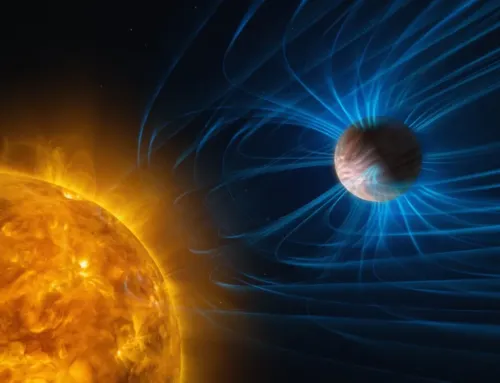
 An exoplanet that orbits a red dwarf star. © Royal Astronomical Society/Gillis Lowry
Why it matters:
It brings us closer to answering one of the biggest questions: Are we alone?
It gives scientists a shortlist of the best places to search for life, saving time and resources.
Future telescopes can focus on these planets to look for atmospheres and biosignatures (like oxygen or methane).
Some of these worlds are relatively close (40–50 light-years away), making them realistic targets for detailed study.

Leave A Comment