

 Moon, Mars Rover. NASA
Engineers at NASA’s Jet Propulsion Laboratory (JPL) are testing new technologies that could be used in future Moon and Mars rovers.
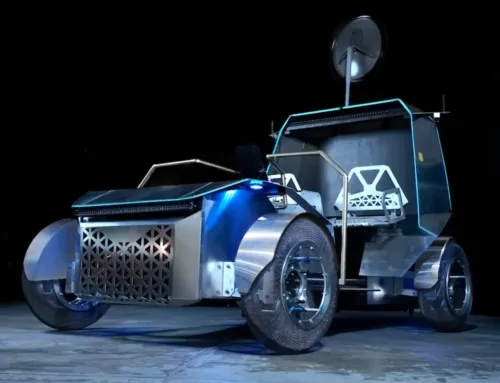
In California’s Colorado Desert near Plaster City, teams used a prototype rover called ERNEST (Exploration Rover for Navigating Extreme Sloped Terrain) to evaluate software designed for a possible long-range lunar mission. The software allows the JPL-built rover to drive on its own and cover long distances with very little help from human operators.
During field tests in March 2026, ERNEST traveled about 16 miles over 37 hours of driving while engineers followed along. This is more than 10 times faster than the pace at which NASA’s Perseverance rover moves across Mars.
The team also studied how the rover performed at dawn, dusk, and nighttime conditions, when long shadows create challenges similar to those found on the Moon. ERNEST is being used as a test platform to demonstrate technologies for a future rover that could be twice its size and capable of extended lunar exploration.
 Moon, Mars Rover. NASA
Development of ERNEST started in 2022 with funding from JPL’s internal research and development program. NASA’s Mars Exploration Program now supports the project, while the recent field tests were funded by NASA’s Exploration Science Strategy Integration Office. JPL is managed for NASA by the California Institute of Technology.
Why it matters:
These tests are helping NASA develop smarter and more capable rovers that can travel farther with less human guidance. The technology could make future missions to the Moon and Mars more efficient, allowing robots to explore larger areas, gather more scientific data, and reach challenging locations that current rovers struggle to access. Autonomous navigation will also be important when communication delays make real-time control from Earth impossible.

Leave A Comment