Skip to content

Posts tagged ‘Nebula’

The unusual Red Rectangle nebula

May 22, 2013

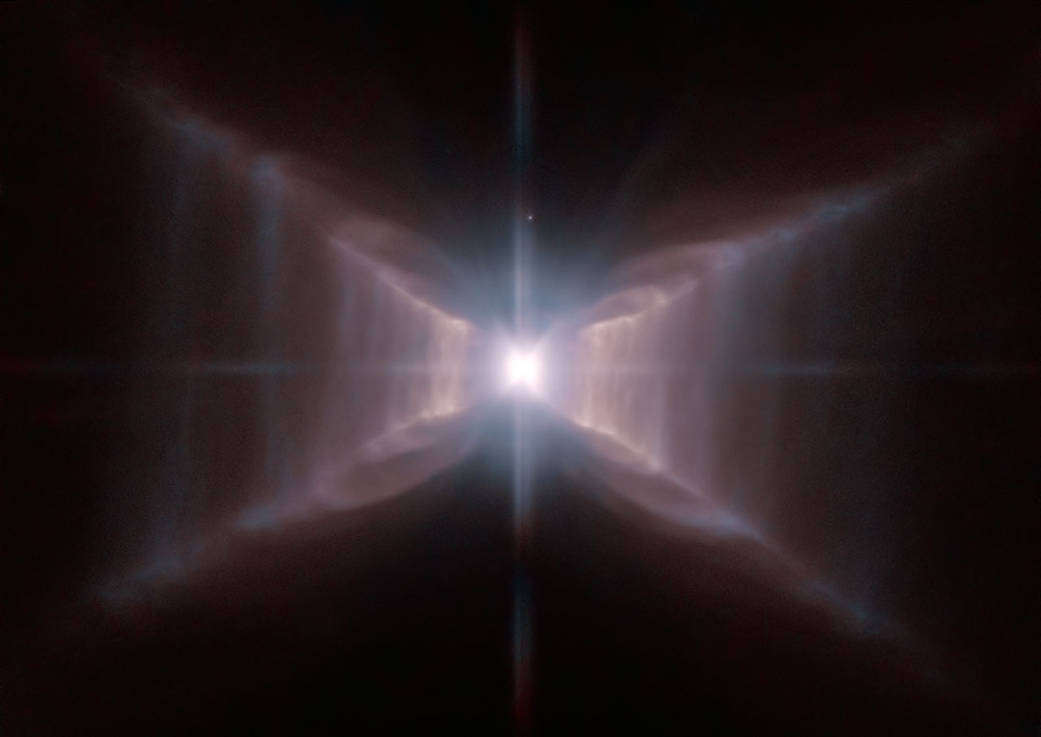
The unusual Red Rectangle nebula

The Red Rectangle Nebula, so called because of its red color and unique rectangular shape, is a protoplanetary nebula in the Monoceros constellation. Also known as HD 44179, the nebula was discovered in 1973 during a rocket flight associated with the AFCRL Infrared Sky Survey called Hi Star.

Read more »

Horsehead of a different color

April 23, 2013

Horsehead Nebula

A new infrared photograph of the iconic Horsehead Nebula by NASA’s Hubble Space Telescope, to mark the 23rd anniversary of the famous observatory.   Image © NASA/ESA/Hubble Heritage Team

Read more »

Celestial Witch’s Broom

September 14, 2012

Celestial Witch’s Broom

The Pencil Nebula also known as NGC 2736, is pictured in a new image from ESO’s La Silla Observatory in Chile. This peculiar cloud of glowing gas is part of a huge ring of wreckage left over after a supernova explosion that took place about 11 000 years ago. This detailed view was produced by the Wide Field Imager on the MPG/ESO 2.2-metre telescope.

Read more »

Glowing Dust in Orion

May 6, 2012

Nebula Messier 78 (NGC 2068) in Orion by APEX

The beautiful image of dust, is from of the region surrounding the reflection nebula Messier 78 (NGC 2068), just to the north of Orion’s Belt. When viewed by Submillimetre-wavelength APEX (Atacama Pathfinder Experiment) telescope, observations are overlaid on the visible-light image in orange.   Credit: ESO/APEX (MPIfR/ESO/OSO)

Read more »

The Ring Nebula

April 21, 2012

M57 - The Ring Nebula

The Ring Nebula – M57 – is probably the most famous celestial band (except for the rings of Saturn). Expansive looping structures are seen to extend far beyond the Ring Nebula’s familiar central regions in this intriguing composite of ground based and Hubble Space Telescope images with narrow band image data from Subaru.

Read more »

Chaos in Orion

April 12, 2012

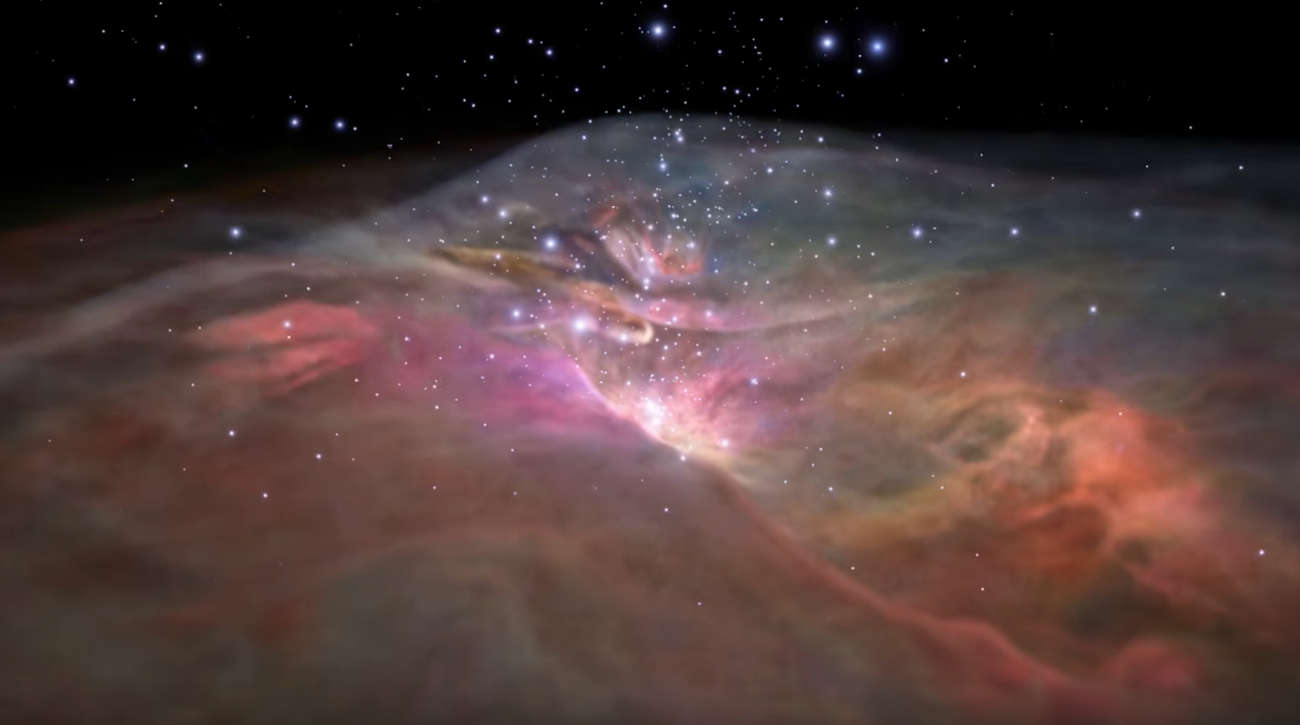
Orion nebula from Spitzer Space Telescope

Baby stars are creating chaos 1,500 light-years away in the cosmic cloud of the Orion Nebula. Green indicates hydrogen and sulfur gas in the nebula, which is a cocoon of gas and dust. Red and orange indicate carbon-rich molecules.

Read more »

Filigree and Shadow

March 31, 2012

Cygnus Loop Nebula, visible here in ultraviolet light

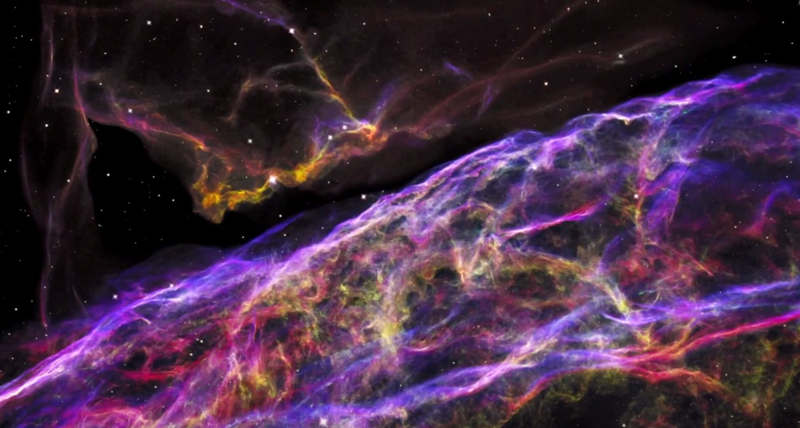
The filaments of gas and dust of the Cygnus Loop Nebula, visible here in ultraviolet light were heated by the shockwave from the supernova, which is still spreading outward from the original explosion.

Read more »

Largest star-forming region

March 12, 2012

30 Doradus Nebula, largest star-forming region

The image, taken in ultraviolet, visible and red light by Hubble’s Wide Field Camera 3, spans about 100 light-years. The nebula is close enough to Earth that Hubble can resolve individual stars, giving astronomers important information about the stars’ birth and evolution.

Read more »

A forthcoming Supernova

February 28, 2012

Eta Carinae stellar system

NASA’s Hubble Telescope captured an image of Eta Carinae about 7,500 to 8,000 light-years from the Sun. This image consists of ultraviolet and visible light images from the High Resolution Channel of Hubble’s Advanced Camera for Surveys.

Read more »

Fried Egg Nebula (video)

February 19, 2012

Fried Egg Nebula

Astronomers have used ESO’s Very Large Telescope to image a colossal star that belongs to one of the rarest classes of stars in the Universe, the yellow hypergiants.

Read more »