


Could our universe be just one part of an endless cycle? A surprising discovery by the James Webb Space Telescope is making scientists rethink what they know about the cosmos.
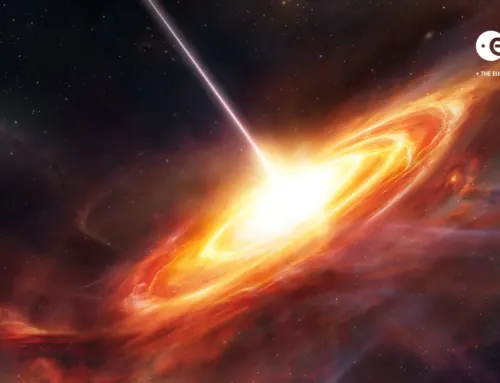
Astronomers have found a very distant galaxy that doesn’t behave as expected. Instead of fitting neatly into the usual Big Bang Theory explanation, it raises new questions about how the universe actually began and evolved.
One idea comes from Roger Penrose, a Nobel Prize–winning physicist. He suggests that the universe doesn’t have a single beginning and end, but goes through endless cycles. According to him, traces from a previous universe might still exist today.
So what’s worrying scientists?
These new observations don’t fully match predictions based on Einstein’s Theory of General Relativity. That theory has explained the universe extremely well for over a century, but now, some data seem to challenge it.
This doesn’t mean Einstein was wrong. It means our understanding might be incomplete. And when that happens in science, it usually leads to something big: a deeper, more accurate picture of how the universe really works.

More articles like this one at
Leave A Comment