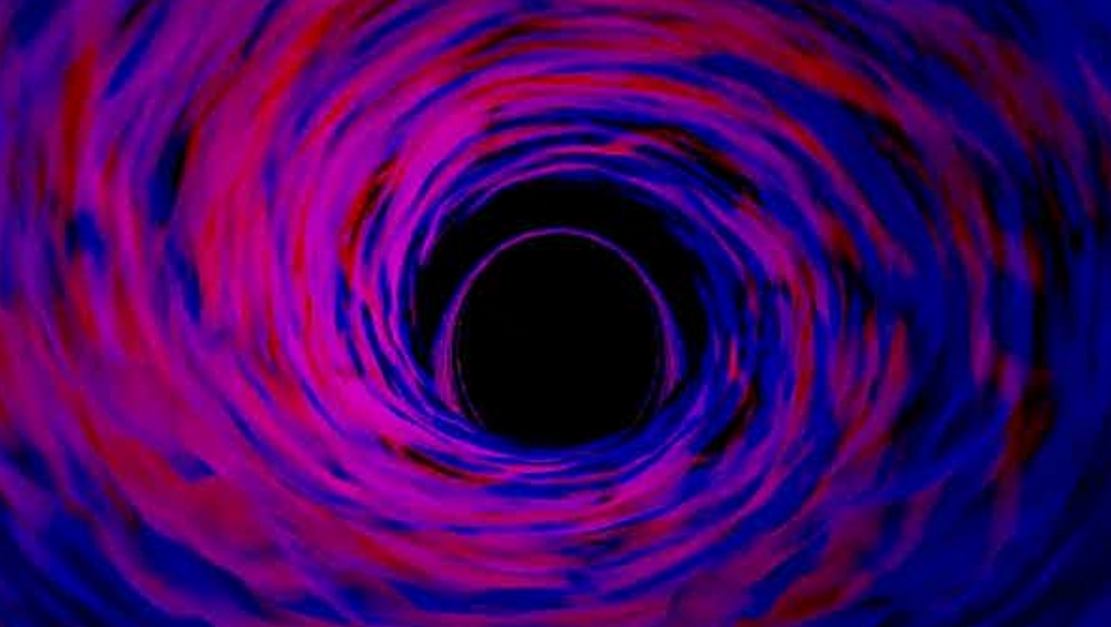
Supermassive Black Hole spins nearly at the speed of light
This supermassive black hole, with millions to billions times the mass of our sun, lies at the heart of a galaxy called NGC 1365 and it is spinning almost as fast as Einstein’s theory of gravity will allow, nearly at the speed of light. Image © NASA/JPL-Caltech
Biggest Ever Black Hole 17 billion times the mass of the sun
This diagram shows how the diameter of the 17-billion-solar-mass giant black hole, in the heart of galaxy NGC 1277, compares with the orbit of Neptune around the Sun. The black hole is eleven times wider than Neptune‘s orbit. Shown here in two dimensions, the “edge” of the black hole is actually a sphere. Image credit: D. Benningfield/K. Gebhardt/StarDate
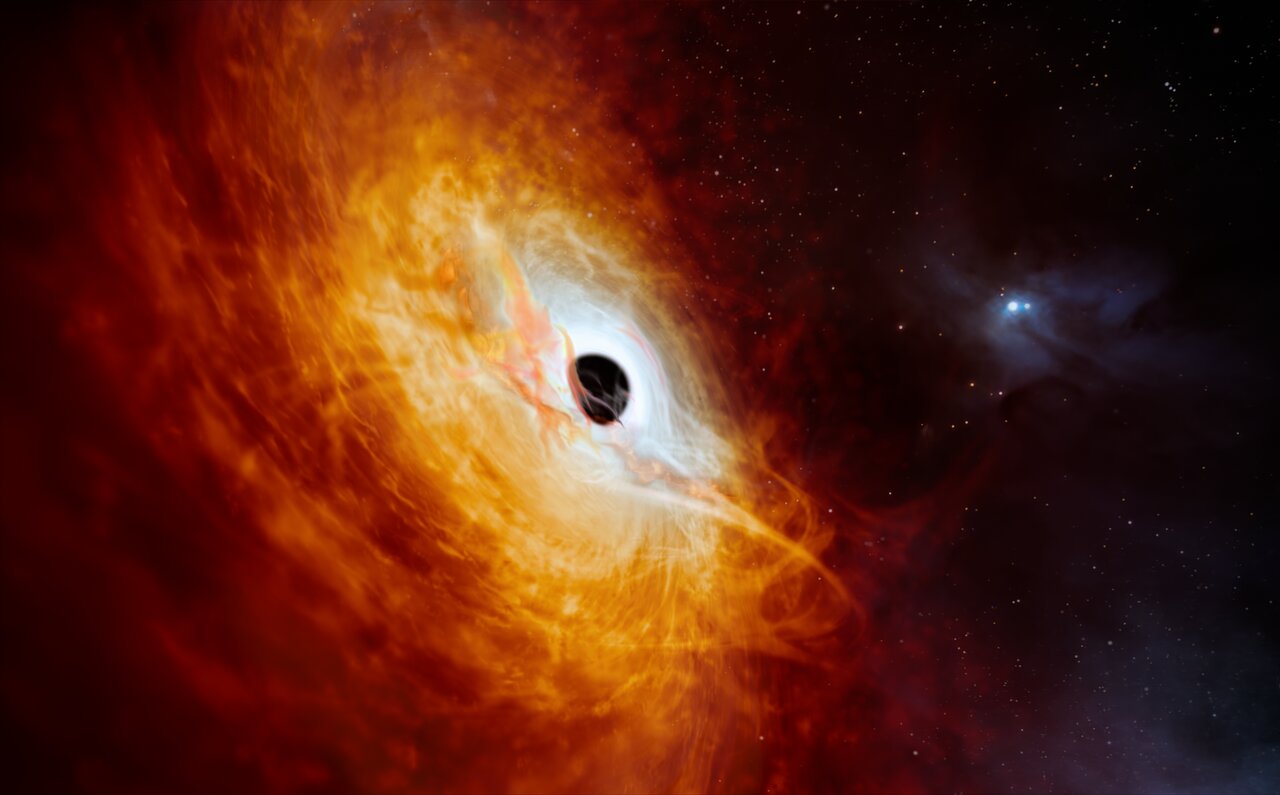
Biggest Black Hole Blast Ever
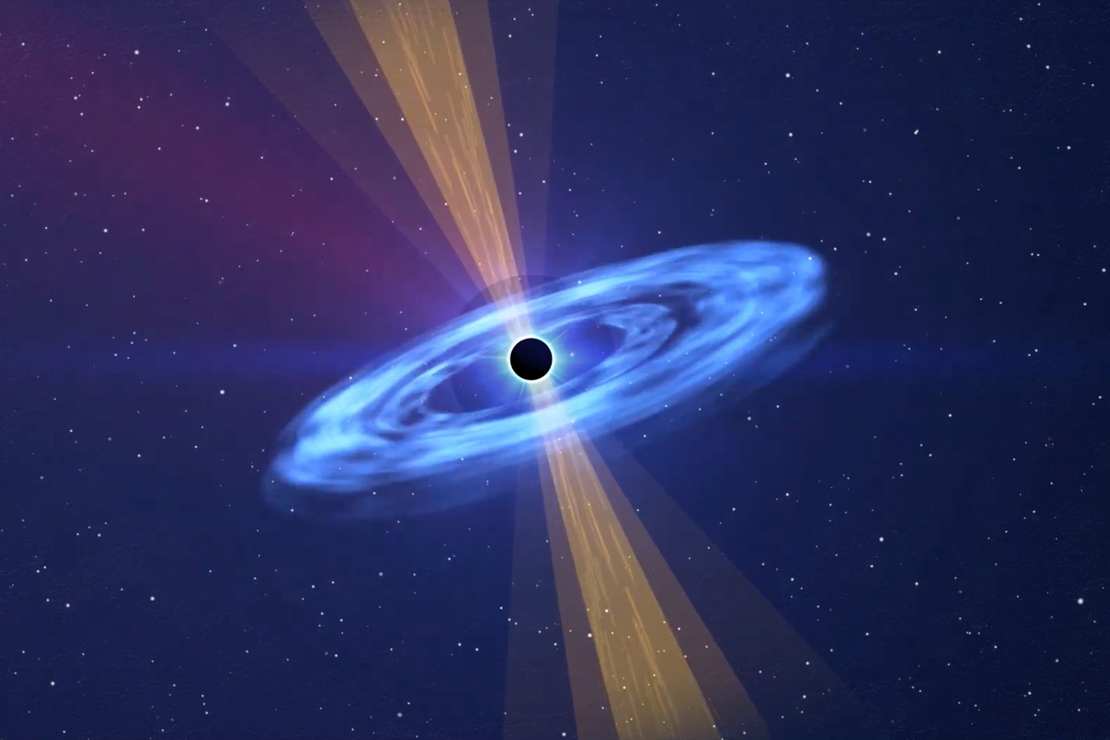
Astronomers have found biggest Black Hole blast ever, in the heart of a Quasar burning 100 times as much energy as the entire Milky Way galaxy. Image credit: ESO
The Milky Way’s Black Hole unleashes the brightest Flare ever
The Milky Way‘s enormous Black Hole unleashes the brightest flare ever, 100 times more powerful than anything ever produced before. Image credit: NASA/MIT/F. Baganoff et al.
New Black Hole in our Galaxy
Astronomers using NASA‘s Swift satellite recently detected a new black hole, by a rise in high-energy X-rays from a source toward the center of our Milky Way galaxy. The outburst, produced by a rare X-ray nova, came from a previously unknown stellar-mass black hole. Image credit: NASA’s Goddard Space Flight Center
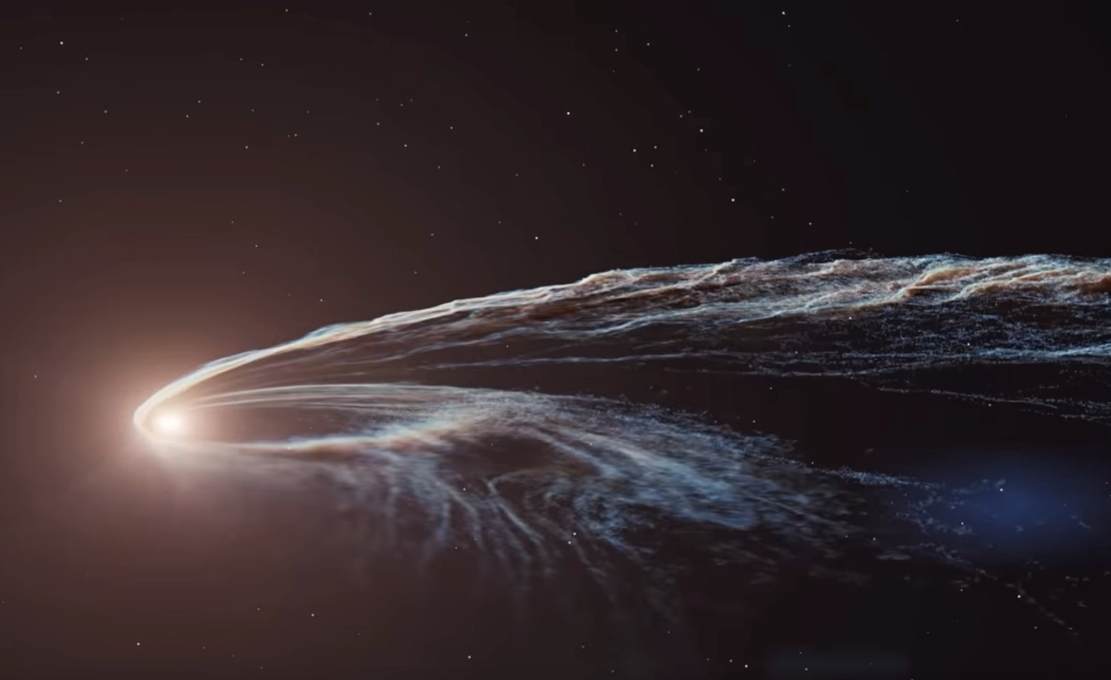
Black Hole devouring a Star (video)
This computer-simulated image shows gas from a tidally shredded star falling into a black hole. Some of the gas also is being ejected at high speeds into space. Credit: NASA, S. Gezari (JHU), and J. Guillochon (UC Santa Cruz)
Pink Opaque
In this NASA’s Chandra X-ray Observatory image, you can see an extraordinary outburst produced by a black hole, in a nearby galaxy, a direct evidence for a population of old volatile stellar black holes.
How Big is a Neutron star
This illustration compares the size of a neutron star to Manhattan. The crushed core of a star that has exploded as a supernova, a neutron star packs more mass than the sun into a sphere just 10 to 15 miles wide. Credit: NASA/Goddard Space Flight Center
NASA detects the smallest Black Hole by its ‘heartbeat’ (video)
An international team of astronomers has identified a candidate for the smallest-known black hole using data from NASA’s Rossi X-ray Timing Explorer (RXTE). The evidence comes from a specific type of X-ray pattern, nicknamed a “heartbeat” because of its resemblance to an electrocardiogram. The pattern until now has been recorded in only one other black hole system.
A Galaxy full of Surprises
This image, from ESO’s Very Large Telescope (VLT), shows a truly remarkable galaxy known as NGC 3621. However this galaxy is bulgeless but has three central black holes.